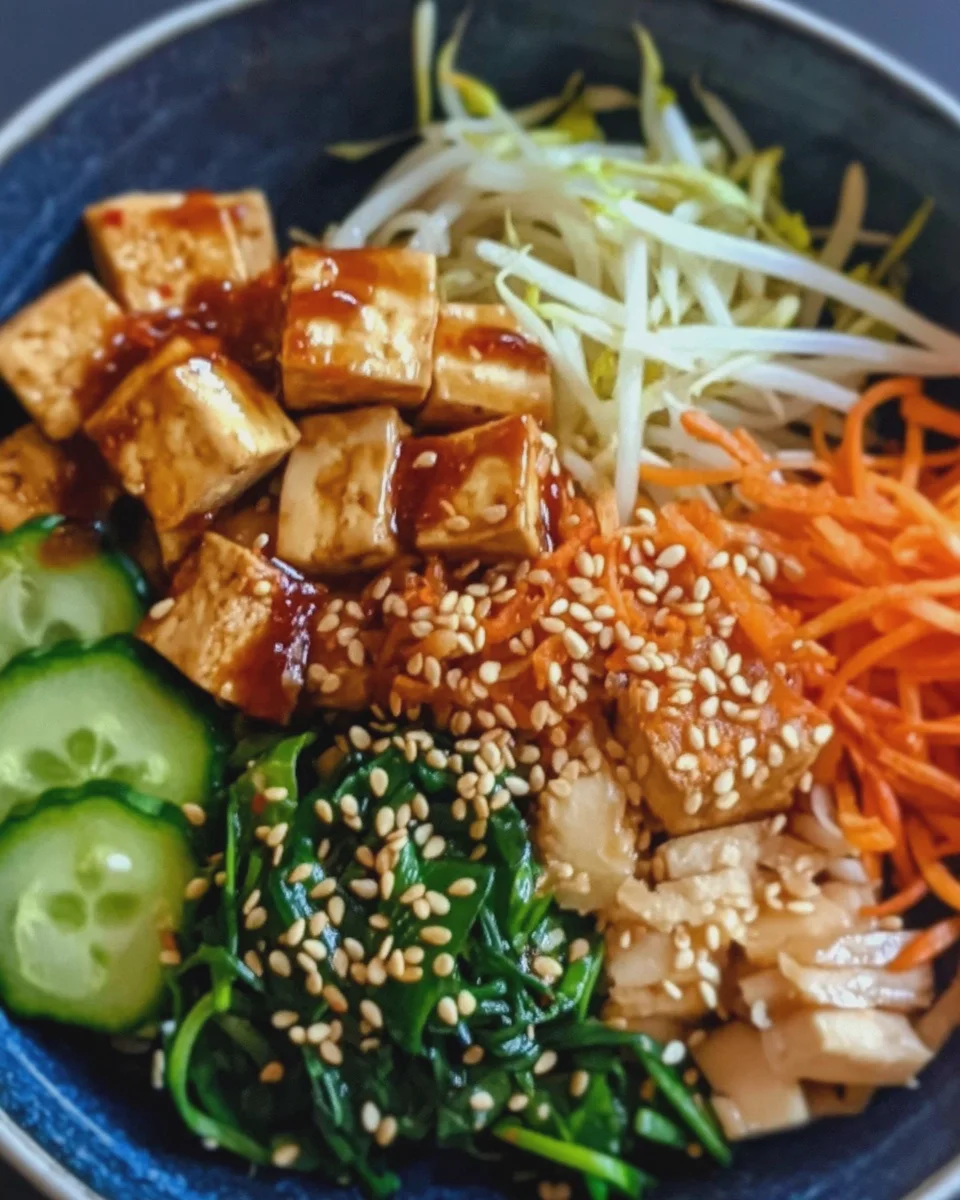
Vegan Bibimbap is a delightful Korean mixed rice dish that brings together colorful stir-fried vegetables, savory tofu, and a bold Gochujang dressing. This dish is perfect for any occasion, whether it’s a cozy family dinner or a vibrant potluck gathering. With its rich flavors and nourishing ingredients, Vegan Bibimbap stands out as a comforting yet exciting meal that everyone can enjoy.
Why You’ll Love This Recipe
- Colorful and Vibrant: The mix of vegetables makes this dish visually appealing and enticing to eat.
- Quick to Prepare: With just 30 minutes of prep and 15 minutes of cook time, you can have a delicious meal ready in under an hour.
- Customizable: You can easily swap out vegetables or proteins based on what you have on hand or your personal preferences.
- Packed with Nutrition: This recipe is loaded with vitamins and minerals from fresh vegetables, making it a healthy choice.
- Flavor Explosion: The combination of Gochujang, sesame oil, and garlic gives this dish a wonderful depth of flavor.
Tools and Preparation
To make Vegan Bibimbap efficiently, having the right tools is essential. These tools will help streamline the cooking process and ensure everything comes together smoothly.
Essential Tools and Equipment
- Knife
- Cutting board
- Skillet or frying pan
- Rice cooker (optional)
- Mixing bowl
Importance of Each Tool
- Knife: A sharp knife allows for quick and precise chopping of vegetables, ensuring even cooking.
- Skillet or frying pan: This is crucial for stir-frying your veggies and tofu to achieve that perfect texture.
- Rice cooker: While not necessary, it simplifies the cooking process by perfectly steaming your rice without constant attention.
Ingredients
Vegetables
- 1 cucumber
- 200 g spinach
- 100 g bean sprouts
- 1 carrot
- 100 g mushroom of choice (I used enoki mushrooms)
Tofu & Seasoning
- 200 g firm tofu
- Salt
- Sesame oil
- Minced garlic
Sauce
- 2 tbsp gochujang
- 1 tbsp rice vinegar
- 1 tbsp agave/maple syrup
- 1 tbsp soy sauce
- 2 cloves garlic
- 2 tsp sesame oil
Other
- Rice
- Sesame seeds for garnish
How to Make Vegan Bibimbap
Step 1: Prepare the Rice
- If using a rice cooker, rinse the rice under cold water until the water runs clear.
- Add the rice to the cooker with the appropriate amount of water (typically 1 cup of rice to 2 cups of water).
- Cook according to the manufacturer’s instructions.
Step 2: Sauté the Tofu
- Drain and press the tofu to remove excess moisture.
- Cut the tofu into cubes.
- In a skillet over medium heat, add sesame oil and minced garlic.
- Add the tofu cubes and cook until golden brown on all sides.
Step 3: Stir-Fry the Vegetables
- In the same skillet, add more sesame oil if needed.
- Sauté each vegetable separately for about 2-3 minutes until tender but still vibrant:
- Start with carrots, then add mushrooms, spinach, bean sprouts, and finally cucumber.
Step 4: Prepare the Gochujang Sauce
- In a mixing bowl, combine gochujang, rice vinegar, agave/maple syrup, soy sauce, minced garlic, and sesame oil.
- Mix well until smooth.
Step 5: Assemble Your Bibimbap Bowl
- Place cooked rice at the bottom of your serving bowls.
- Arrange sautéed vegetables and tofu on top of the rice in sections for an appealing presentation.
- Drizzle with Gochujang sauce and sprinkle sesame seeds on top before serving.
Enjoy your flavorful Vegan Bibimbap!
How to Serve Vegan Bibimbap
Vegan Bibimbap is a delightful dish that can be enjoyed in various ways. Whether you’re serving it for a casual dinner or a special occasion, here are some creative serving suggestions to elevate your meal.
Bowl Style
- Use large, shallow bowls to showcase the vibrant colors of the ingredients. Layer the rice first, then artfully arrange the vegetables and tofu on top.
Family Style
- Serve Vegan Bibimbap in a communal dish where everyone can help themselves. This option encourages sharing and enjoying the meal together.
Toppings Bar
- Set up a toppings bar with additional ingredients like avocado, kimchi, or pickled vegetables. Guests can customize their bowls to their taste.
Cold Bibimbap
- For a refreshing twist, serve the Vegan Bibimbap cold. This works especially well in warmer months and can be made ahead of time.
Garnish Elegantly
- Finish each bowl with a sprinkle of sesame seeds or sliced green onions for an added touch that enhances both flavor and presentation.
How to Perfect Vegan Bibimbap
To ensure your Vegan Bibimbap turns out perfectly every time, follow these helpful tips.
-
Choose fresh vegetables – Fresh produce adds vibrant color and flavor. Look for seasonal vegetables for the best taste.
-
Press tofu – Pressing firm tofu removes excess moisture, allowing you to achieve a better texture when frying it.
-
Adjust spice level – Feel free to adjust the amount of Gochujang based on your spice tolerance. Start with less if you’re unsure.
-
Cook rice properly – Use short-grain rice for an authentic texture. Rinse it thoroughly before cooking for perfect results.
-
Experiment with flavors – Don’t hesitate to add other sauces or spices that suit your taste preferences. Vegan Bibimbap is versatile!
Best Side Dishes for Vegan Bibimbap
Pairing side dishes with your Vegan Bibimbap can enhance your meal experience. Here are some delicious options:
-
Kimchi – A traditional Korean side dish made from fermented vegetables, offering a spicy and tangy flavor.
-
Pickled Radish – These crunchy pickles add a refreshing contrast to the warm flavors of Vegan Bibimbap.
-
Korean Potato Salad – A creamy and mildly sweet salad that complements the savory elements of the main dish.
-
Sesame Spinach Salad – Lightly dressed spinach provides additional greens and nutty flavor through sesame oil.
-
Cucumber Salad – A crisp cucumber salad dressed in vinegar offers a refreshing bite alongside your bibimbap.
-
Miso Soup – A warm bowl of miso soup provides comfort and depth, making it an excellent companion for your meal.
-
Grilled Eggplant – Smoky grilled eggplant adds another layer of texture and flavor that pairs beautifully with rice-based dishes.
-
Sweet Potato Fries – Crispy sweet potato fries introduce sweetness and crunch, creating a delightful contrast on your plate.
Common Mistakes to Avoid
Making Vegan Bibimbap can be simple, but some common mistakes can take away from its deliciousness. Here are a few to watch for:
- Skipping the seasoning: Not seasoning your vegetables or tofu well can lead to bland flavors. Use salt and sesame oil generously to enhance the taste.
- Overcooking the vegetables: Cooking veggies for too long makes them mushy. Stir-fry them just until tender to keep their vibrant colors and crunch.
- Using the wrong rice: Short-grain rice is ideal for bibimbap as it holds together better. Avoid long-grain rice for this dish.
- Neglecting the sauce: The Gochujang sauce is essential for flavor. Don’t skimp on it; adjust the spice level to suit your taste.
- Forgetting garnishes: Garnishes like sesame seeds add texture and visual appeal. Don’t omit them; they elevate your dish.
Storage & Reheating Instructions
Refrigerator Storage
- item Store Vegan Bibimbap in an airtight container in the refrigerator.
- item It will last for up to 3 days when properly stored.
Freezing Vegan Bibimbap
- item You can freeze Vegan Bibimbap, but it’s best to store components separately, especially the tofu and vegetables.
- item Use freezer-safe containers or bags, ensuring all air is removed.
Reheating Vegan Bibimbap
- item Oven: Preheat to 350°F (175°C), place in an oven-safe dish, cover with foil, and heat for about 15-20 minutes.
- item Microwave: Place in a microwave-safe bowl, cover, and heat in 1-minute intervals until warm throughout.
- item Stovetop: Heat a little oil in a pan, add Vegan Bibimbap, and stir until heated through.
Frequently Asked Questions
Here are some common questions about preparing and enjoying Vegan Bibimbap:
What is Vegan Bibimbap?
Vegan Bibimbap is a Korean mixed rice dish featuring stir-fried vegetables, tofu, and spicy Gochujang sauce. It’s both nourishing and flavorful.
Can I customize my Vegan Bibimbap?
Absolutely! You can add any vegetables you like or substitute different proteins such as tempeh or seitan.
How do I make Vegan Bibimbap gluten-free?
To make it gluten-free, use tamari instead of soy sauce and ensure that all ingredients are certified gluten-free.
Is Vegan Bibimbap healthy?
Yes! It’s packed with vegetables and protein-rich tofu, making it a nutritious meal option full of vitamins and minerals.
What can I serve with Vegan Bibimbap?
You can enjoy it alone or pair it with side dishes like kimchi or pickled vegetables for added flavor.
Final Thoughts
Vegan Bibimbap offers a delightful mix of flavors and textures that make it a comforting meal for any occasion. The recipe’s versatility allows you to customize it based on your preferences, whether you want extra veggies or different sauces. Give this amazing dish a try today!
Vegan Bibimbap
Vegan Bibimbap is a delightful Korean mixed rice bowl that bursts with vibrant colors and flavors. This nourishing dish features a medley of stir-fried vegetables, savory tofu, and a spicy Gochujang sauce that brings everything together. Perfect for family dinners or potlucks, Vegan Bibimbap is both a comforting and exciting meal that pleases everyone at the table. With its quick preparation time and customizable ingredients, you can create a dish that’s not only delicious but also tailored to your taste preferences.
- Prep Time: 30 minutes
- Cook Time: 15 minutes
- Total Time: 45 minutes
- Yield: Serves 4
- Category: Main
- Method: Stir-frying
- Cuisine: Korean
Ingredients
- 1 cucumber
- 200 g spinach
- 100 g bean sprouts
- 1 carrot
- 100 g mushrooms (e.g., enoki)
- 200 g firm tofu
- Salt
- Sesame oil
- Minced garlic
- 2 tbsp Gochujang
- 1 tbsp rice vinegar
- 1 tbsp agave or maple syrup
- 1 tbsp soy sauce
- 2 cloves garlic (additional for sauce)
- Sesame seeds (for garnish)
- Rice
Instructions
- Prepare the rice in a rice cooker or pot according to package instructions.
- Press and cube the tofu, then sauté it in sesame oil with minced garlic until golden brown.
- Stir-fry each vegetable separately in the same skillet for about 2–3 minutes until tender yet vibrant.
- Mix Gochujang, rice vinegar, agave/maple syrup, soy sauce, and minced garlic in a bowl to create the sauce.
- To serve, layer cooked rice in a bowl and top with sautéed vegetables and tofu. Drizzle with Gochujang sauce and sprinkle sesame seeds on top.
Nutrition
- Serving Size: 1 bowl (approximately 400g)
- Calories: 540
- Sugar: 8g
- Sodium: 720mg
- Fat: 18g
- Saturated Fat: 3g
- Unsaturated Fat: 13g
- Trans Fat: 0g
- Carbohydrates: 76g
- Fiber: 9g
- Protein: 20g
- Cholesterol: 0mg